Dementia and Alzheimer's
Dementia care, without the locked door
Dementia is the thing families are most frightened of, and the thing most facilities describe least honestly. Here is how we do it, including the parts other places do not talk about.
Why this place exists
Founded by a man who nursed his own mother through it
The owner lives on the resort with his two children. His mother lived here too, with dementia, until she died in March 2018 at the age of 95. She is the reason this place works the way it does, and the reason the founder pays close attention to the running of it rather than leaving it to a manager.
That history is why the rest of this page is written plainly rather than reassuringly.
"We had a guest come from San Francisco who hadn't walked in seven months, hadn't talked in two. After two months here and lots of encouragement, she was walking again and soon after talking, too. It didn't require pills or physiotherapy. Just loving care." Peter Brown, founder · Elite+ Magazine
The difference that matters most
Many facilities operate a complete lockdown policy. We do not.The resort's own description of its dementia care
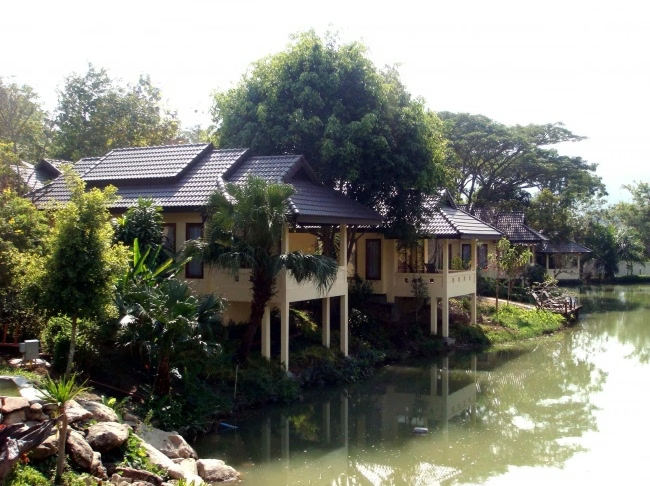
Current thinking does not hold that locking people in is best for their well-being, their health or their mental state, and it certainly does not give them the most enjoyable life. Across twelve acres of gardens, residents with dementia do not feel locked away. They walk in the grounds with a carer, and some keep their own small gardening plot.
What we can take on
All levels, and a memory care unit for when more is needed
We cater for all levels of dementia. Having dementia, including Alzheimer's, does not necessarily stop an active and enjoyable life, but as the disease advances more care is required.
For residents needing 24-hour care and supervision there are two boutique memory care facilities. The memory care unit has five rooms, each with its own bathroom, television and personal space. In practice the need for it is limited, because the level of support elsewhere on the resort is high enough that most people do not require it.
Every person with dementia is different, so every plan is built for that person. In discussion with family or guardians we assess the level of care needed and structure a plan to meet it.
What slows it down
Mental stimulation, routine, links with the past, and a good diet
Living with dementia becomes harder with time, and eventually independent living usually becomes impossible. The speed at which that stage arrives can be delayed. These are the four things that make the difference, and all four are built into an ordinary day here.
Stimulation and activity
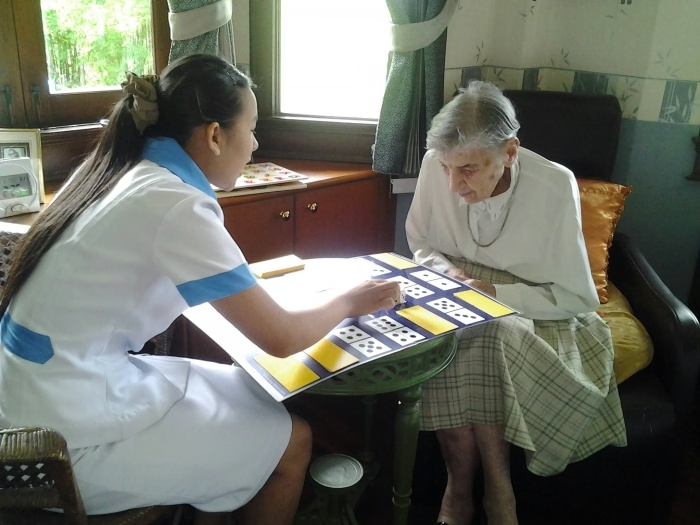
Keeping residents as active as possible has been shown to help both mental and physical state. Activities form part of the day:
- Arts and crafts
- Card and board games
- Ball games and group games, including bingo
- Singing and quizzes
- Photography
- Fishing on the lake, subject to individual capability
- Supervised swimming
- A personal gardening plot for those who want one
Routine and familiarity
Routine matters, so residents are involved in life at home rather than waited on:
- Laying the table
- Making a cup of tea
- Sweeping the floor
- Familiar objects from home in the room, and we actively encourage it: photographs, paintings, souvenirs, anything that keeps a link to past home life and family
- Basic computer skills where possible, so residents can keep in touch with family by email or video call
- Local excursions, sightseeing and regular shopping trips
Results
We have seen people improve, and families notice the difference
Good levels of care work. There have been some outstanding improvements in the lives of residents with dementia here, and our experience with dementia care is now strong.
"My wife may not know who I am anymore, but she is smiling and happy all the time."
— Spouse of resident, featured in the Daily Mail
Do you lock residents in?
No. There is no lockdown policy. Residents with dementia walk in the gardens with a carer, and the twelve acres mean there is somewhere to walk. We hold the view that confinement is not good for anyone's health or state of mind.
What happens as the dementia advances?
The care increases around the person rather than the person being moved on. Staff numbers are set by the care needed. If 24-hour supervision becomes necessary there is a five-room memory care unit inside the same gardens, not behind a separate door.
Can we bring things from home?
Please do, and bring more than you think. Photographs, paintings, souvenirs and familiar objects help retain a link to past home life and family, and we actively encourage rooms to be filled with them.
Will we be able to stay in touch?
Yes. Where it is possible we teach basic computer skills so residents can keep in touch with family by email or video call. If someone is not familiar with computers, we guide them through it until they are.
Can you show us evidence that this works?
Not on a web page. We do not publish case studies, but we will talk you through real examples on enquiry.
What does dementia care cost?
Fees are quoted individually, because they depend on the level of care assessed and the room chosen. See long stay for what is included.
Come and see it
Bring your questions, including the difficult ones
Families arranging dementia care are usually carrying guilt as well as logistics. Come and walk the gardens, meet the nursing staff, and ask the things you have not wanted to ask anyone else.