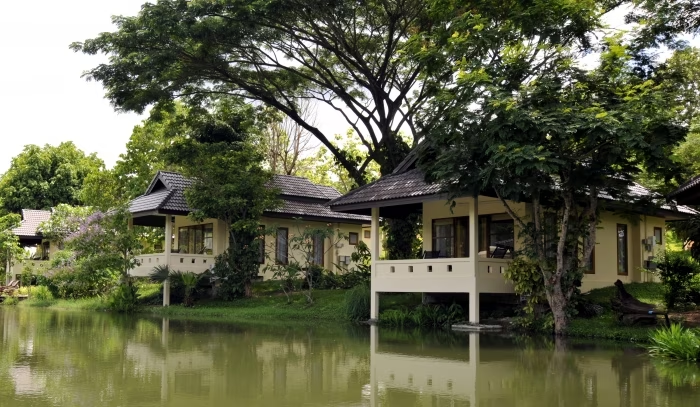
A life that still feels like your own.
Retirement and dementia care on twelve acres near Chiang Mai. You keep your independence for as long as you can, and we're right there with round-the-clock nursing the moment more care is needed.
6× Most Outstanding Care Resort in the World
24-hour on-site nursing
12 acres of gardens and lake
English and Thai spoken
Two levels of care
We're with you, whatever the years bring
Most people who come here want to keep living their own life, and that's exactly what we help them do. Some need a little help along the way, some need a great deal, and we never ration care or ask anyone to move out when their needs change. You move between these two levels without moving house, and without a new contract.
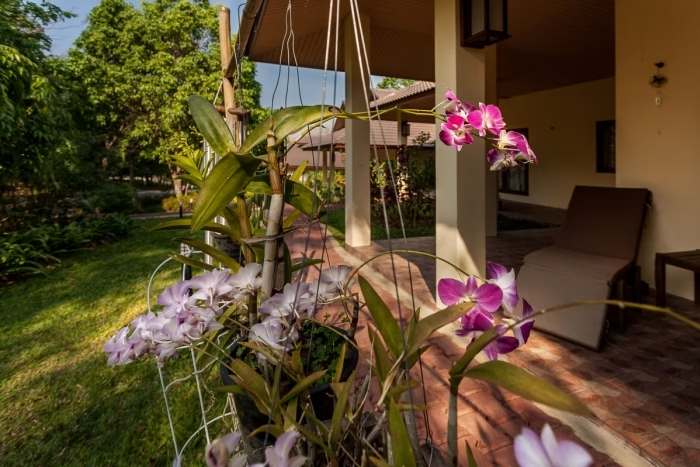
Your own front door, with care close by
For anyone who still wants their own front door
- Your own villa in the gardens, with a terrace, air conditioning and a fridge
- An alarm in every room, connected straight to the nursing station
- Meal periods rather than mealtimes, so you eat when you want to
- Daily welfare visits and blood pressure checks
- Activities seven days a week, and you join the ones you feel like
- Leave the resort on your own whenever you like
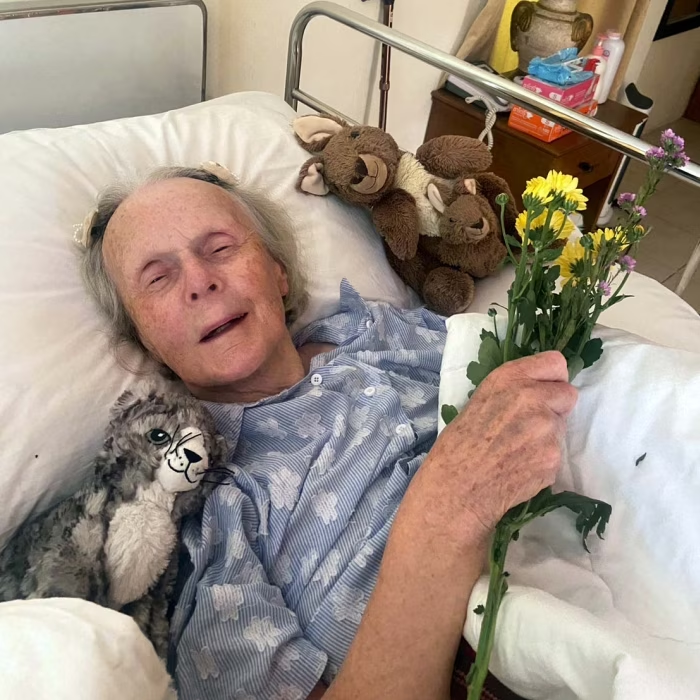
Close, attentive nursing
For anyone who needs nursing day and night
- Nurses with nursing degrees, and carers trained to assistant nurse level
- Medication managed for you, including injection regimes
- Blood sugar and other health checks as often as they are needed
- Staff numbers set by the care needed, not by a budget
- Hospital visits accompanied by our own staff
- A memory care unit for advanced dementia, inside the same gardens
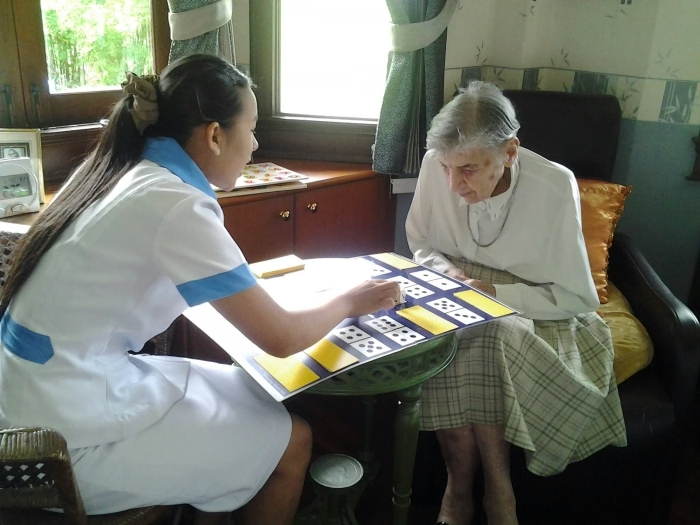
Dementia and Alzheimer's
Built by a man who nursed his own mother through it
He lives here on the resort with his two children. His mother lived here too, with dementia, until she passed in March 2018 at the age of 95. Watching her go through it is why this place feels the way it does.
Our memory care unit sits inside the same gardens as everyone else, so nobody is tucked away behind a separate door.
What this is not
We work hard not to become a boarding school for the elderly.The resort's own description of its philosophy
So there's no fixed mealtime, just a broad window: breakfast runs from 07:00 to 10:00 and you come down whenever you're ready. The menu covers Western, Thai, other Asian and vegetarian cooking, and the kitchen happily works around dietary and religious needs. Residents who want to go out on their own are welcome to, and we send them off with a phone just in case.
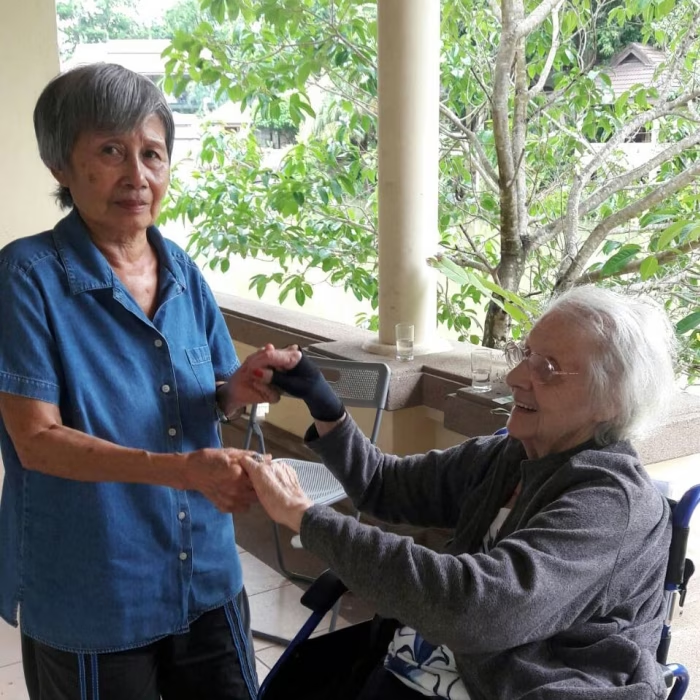
The staff
Cared for by Northern Thai people, in a culture built around it
This is a region with strong family traditions and a deep, settled respect for older people. Caring for the elderly is something people here expect to do, not something they resent. It isn't easy work to do cheerfully day after day, and our staff manage it with real warmth.
We check blood pressure daily, and blood sugar and other things as often as they're needed. Care is given in English and Thai, whichever puts you more at ease.
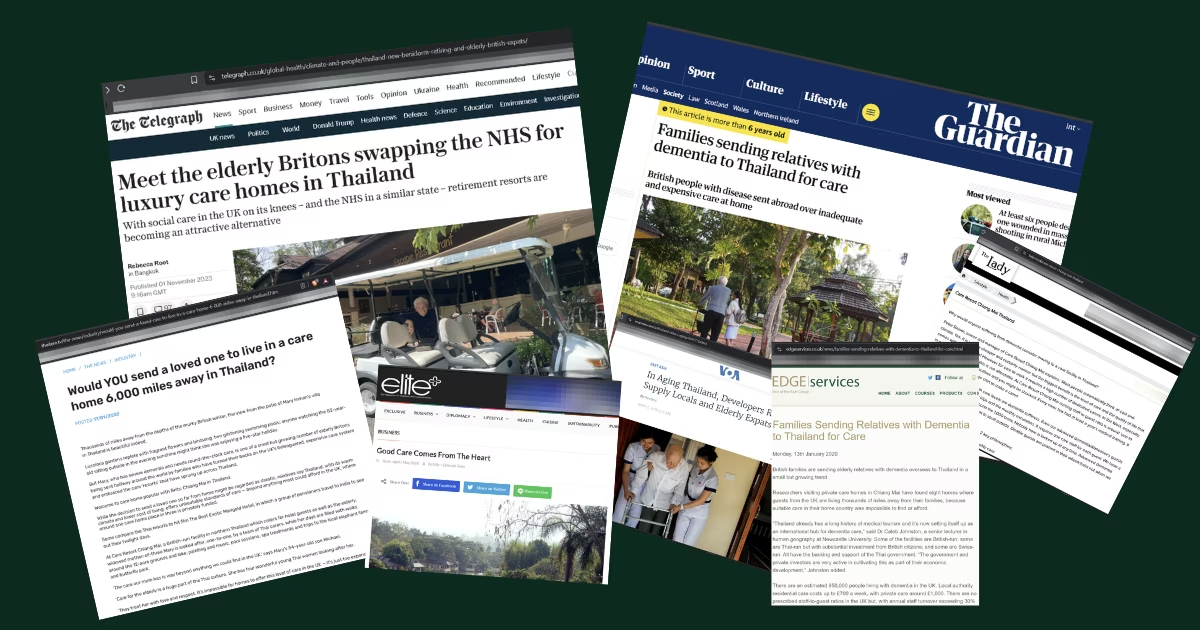
In the press
Covered by The Guardian, The Telegraph, VOA and others
Independent journalists, not us, have written about why families are choosing dementia care in Thailand.
What families tell us
Real words, from people who have made the move
"Friends thought we were mad. But it's the best move we've made." Rita Mallard, resident · The Telegraph
Common questions
Questions families ask first
Can't find the one you need here? Just ask us directly. We would always rather explain it properly than leave you guessing.
What does it cost?
Fees are quoted individually rather than listed, because they depend on the level of care assessed and the villa chosen. In the resort's own words: we purposely do not publish pricing on the website because our pricing depends on the level of care necessary and the room type chosen, we prefer to discuss what you, or your relative, needs.
For context on where to start: comparable residential care in the UK, United States and Australia commonly runs from around USD 8,000 to 15,000 a month. Care in Thailand is considerably less than that, though it is not cheap. Tell us the level of care needed and we will give you a real figure.
What happens if my parent needs more care later?
Nothing needs to change, and nobody has to move out. We never ration care, and staffing is set by what's actually needed. You move between independent living and close care in the same home, without a new contract.
Can we visit before deciding?
Yes, and we would much rather you did. Just book an appointment first, since unannounced visits pull our care staff away from the residents they're looking after. There's accommodation on site if you'd like to stay over, and plenty of families travelling from abroad turn the trip into a small holiday.
Is the resort suitable for a wheelchair?
Mostly, and we are honest that the site has slopes. There are purpose-built and adapted villas with 90cm (35in) doors and no steps, ramp access to the restaurant, lounge, library, fitness room and spa, a ramp and a lift into the larger pool, and a hydraulic wheelchair lift on the minibus so nobody is left behind on excursions. Only the two penthouse suites are reached by steps.
Can a husband and wife stay together if only one needs care?
Yes. Couples and friends can stay together, and the range of villa types means there is normally a suitable arrangement.
What about hospitals and doctors?
Thailand does not use a general practitioner system; care goes directly to specialists, and Chiang Mai has a number of world-class hospitals. Hospital visits are normally accompanied by our staff.
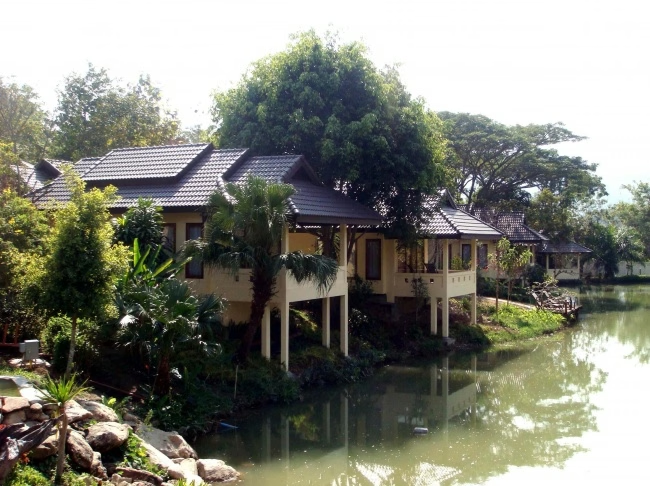
Come and see it
Walk the gardens. Meet the people who work here.
That's really the only way to judge a place like this, which is why we'd rather book you in for a visit than have you fill out a form. We'll show you everything, including the parts that never make it into photographs.